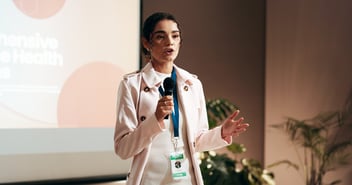
Biostatistics is a core foundational discipline in public health, driving strategies that impact public health outcomes worldwide.
In today’s rapidly evolving world, decisions and outcomes are increasingly powered by vast amounts of data and advanced technology. Every public health initiative, whether tracking disease trends, evaluating interventions or shaping policy, relies on rigorous statistical methods at every stage, from study design, data acquisition, management and integration to advanced analytics, insight generation and effective data-driven decision-making. Because of this, biostatistics has the influence to shape the future of medicine and public health through data-driven insights.
Learn how deeply biostatistics impacts the field of public health and explore its broader implications across public health.
What is Biostatistics?
Biostatistics is the science of transforming complex data into actionable knowledge that drives decision-making for public health and medicine. It provides the scientific tools to analyze big health data to quantify uncertainty, draw inferences, distinguish signals from noise to monitor disease patterns and evaluate interventions that improve health outcomes.
Through its core focus areas—data analytics and statistical modeling, study design and experimental methods, disease surveillance and predictive modeling, causal inference and evaluation of interventions, data integration and curation, modern machine learning and statistical computing—biostatistics provides insights and methods that inform research, guide policy and strengthen decision-making at every level of public health and medicine. Because it sits at the forefront of decision-making processes, biostatistics naturally informs and connects all other areas of public health, including:
|
|
With modern advancements in health technology, biostatistics has become a critical field. For example, innovations such as wearable health monitors allow continuous real-time tracking of heart rate, sleep patterns and physical activity, giving biostatisticians the tools to predict health risks and identify early warning signs for chronic conditions. In clinical settings, AI-assisted diagnostics rely on sophisticated statistical algorithms to interpret medical images and laboratory results with increasing accuracy. The development and evaluation of mRNA vaccines, such as those for COVID-19, relied on adaptive clinical trial designs and advanced statistical modeling to rapidly assess efficacy and safety. Biostatistics also underpins big data analytics in population health studies, enabling researchers and policymakers to detect trends, evaluate interventions and allocate resources efficiently. These innovations, powered by biostatistical methods, are transforming everything from individualized patient care to large-scale public health policy.
The Work of a Biostatistician in Public Health
Whether forecasting disease outbreaks or evaluating the effectiveness of treatments, biostatisticians contribute directly to how we address today’s most pressing health challenges.
Discover some of the many uses of biostatistics.
Barriers to Health Equity Across the Nation
While providing equitable healthcare based on individual needs seems straightforward, various challenges—from systemic barriers to social determinants—make achieving health equity complex in practice.
Health Risk Assessment
One core responsibility of a biostatistician is assessing risks related to environmental, genetic and behavioral factors. Through the use of statistical modeling, biostatisticians help predict the likelihood of disease outbreaks and public health threats.
These models are essential in predicting risks for chronic diseases, occupational hazards and community health planning, helping officials allocate resources that mitigate health risks before they escalate.
Disease Surveillance
Another key facet of a biostatistician’s work is disease surveillance, which sits at the intersection of epidemiology and biostatistics.
Disease surveillance is the tracking and monitoring of diseases through statistical methods. Biostatisticians use these methods to identify trends in the spread of diseases, such as monitoring flu outbreaks and helping map out courses of action for prevention.
For example, during the COVID-19 pandemic, biostatistical models informed everything from social distancing policies to vaccine distribution strategies.
Statistical Methods in Medical Research and Clinical Trials
Biostatistics ensures the integrity and validity of clinical trials, providing insight into sample sizes, data reliability and error reduction in studies.
Statistical methods are used in evaluating the effectiveness of new treatments and medications, ensuring regulatory compliance with drug approvals by the FDA and WHO guidelines.
Data Science in Healthcare
Biostatistics is at the intersection of data science and healthcare. With expertise in data analysis, biostatisticians interpret large-scale healthcare data sets to:
- Support medical decisions, hospital efficiency and treatment effectiveness
- Identify disparities in health outcomes across different populations
- Inform government and institutional health policies
By drawing meaningful conclusions from complex data, biostatisticians help public health professionals design better-targeted interventions—ones that are more precise, equitable and responsive to the needs of specific populations.
Biostatistics in Action
The power of biostatistics is not theoretical.
Biostatistics shapes how public health is used to address healthcare challenges. An example is seen through a New York City neighborhood COVID-19 dashboard developed by Columbia faculty and students. During the height of the pandemic, this tool provided granular, zip code–level insights into COVID-19 testing, cases, hospitalizations and deaths.
Using data from the NYC Department of Health and Mental Hygiene, the dashboard helped visualize daily trends in the spread of COVID-19 and identify neighborhood-level hotspots. With interactive maps and 7-day moving average projections, users could easily spot emerging hotspots and anticipate potential surges.
Another meaningful example in biostatistics can be seen through the work of Columbia Mailman alum, Dr. Olajide Williams. As a nationally recognized neurologist and public health advocate, Dr. Williams applies research and data-driven methods to advance health literacy through hip hop music among children in marginalized communities. His research has also been used to reduce disparities in stroke education and treatment.
Biostatistics professionals often find work with the Centers for Disease Control and Prevention (CDC) or global health NGOs, applying their training to combat infectious diseases, evaluate health interventions and shape health systems worldwide.
Study Biostatistics and Public Health at Columbia University
At the Mailman School of Public Health, the Department of Biostatistics is a leader in statistical innovation and public health advancement.
With innovative research frequently supported by the National Institutes of Health (NIH), the department fosters cutting-edge inquiry into some of today’s most pressing health issues.
Located in New York City, a global hub for healthcare innovation, the Columbia Mailman School offers unmatched opportunities for hands-on learning, community engagement and collaboration with organizations serving diverse populations. Students learn from world-class faculty who blend deep expertise with challenging, interdisciplinary curriculum designed for real-world application. Students also benefit from lifelong career services and a strong alumni network to support them beyond their graduate studies and well into their professional development.
The biostatistics department offers three graduate degree paths:
- MS in Biostatistics: A research-intensive degree that combines advanced training in statistical methodology with a broad public health foundation. Ideal for students with backgrounds in science, mathematics, statistics, data science, health or medicine who are looking to build expertise for careers in research and data-driven healthcare and health industry.
Students may choose one of six program tracks within the degree, including:
-
- Clinical Research Methods: Designed for doctoral-level professionals seeking foundational training in clinical research design and analysis.
- Pharmaceutical Statistics: The first MS program of its kind, blending biostatistics with pharma regulations and trial design, taught by industry experts.
- Statistical Genetics: Focuses on modern genetic analysis methods, combining statistical rigor with hands-on experience in cutting-edge genetic research.
- Theory and Methods: Offers in-depth statistical theory training, ideal for future PhD students or those pursuing research careers in health sciences.
- Public Health Data Science: Merges traditional biostatistics with modern data science tools, emphasizing reproducibility, visualization and interdisciplinary research.
- MS in Patient Oriented Research: A multidisciplinary degree that provides training in the fundamentals of clinical and translational investigation, with the goal for junior doctoral researchers to compete more effectively for research funding.
- MPH in Biostatistics: A practice-based program designed to strengthen the quantitative skills of public health professionals, preparing them to apply, interpret and communicate statistical methods across diverse health and medical care settings.
These degree paths provide a thorough curriculum that builds fluency in statistical methods, programming, data analysis and critical thinking. Through coursework, practicum opportunities and research projects, students develop the technical and analytical skills needed to drive meaningful change in healthcare, public health, policy and beyond.
Interested in learning more? Request more information or meet with an admissions counselor to explore how Columbia Mailman’s Biostatistics Department can equip you to transform data to foster healthier communities.